Snippet — Managing Underpeformers
Summary of Key Concepts
Addressing Underperformance: Underperformance is when a person or team fails to contribute adequately, affecting colleagues’ reliance and overall organizational efficiency. There are two Main Causes:
- Refusal to Align: Individuals pursue personal goals rather than organizational objectives.
- Failure to Execute: Poor performance in terms of missed deadlines, low-quality work, and disengagement.
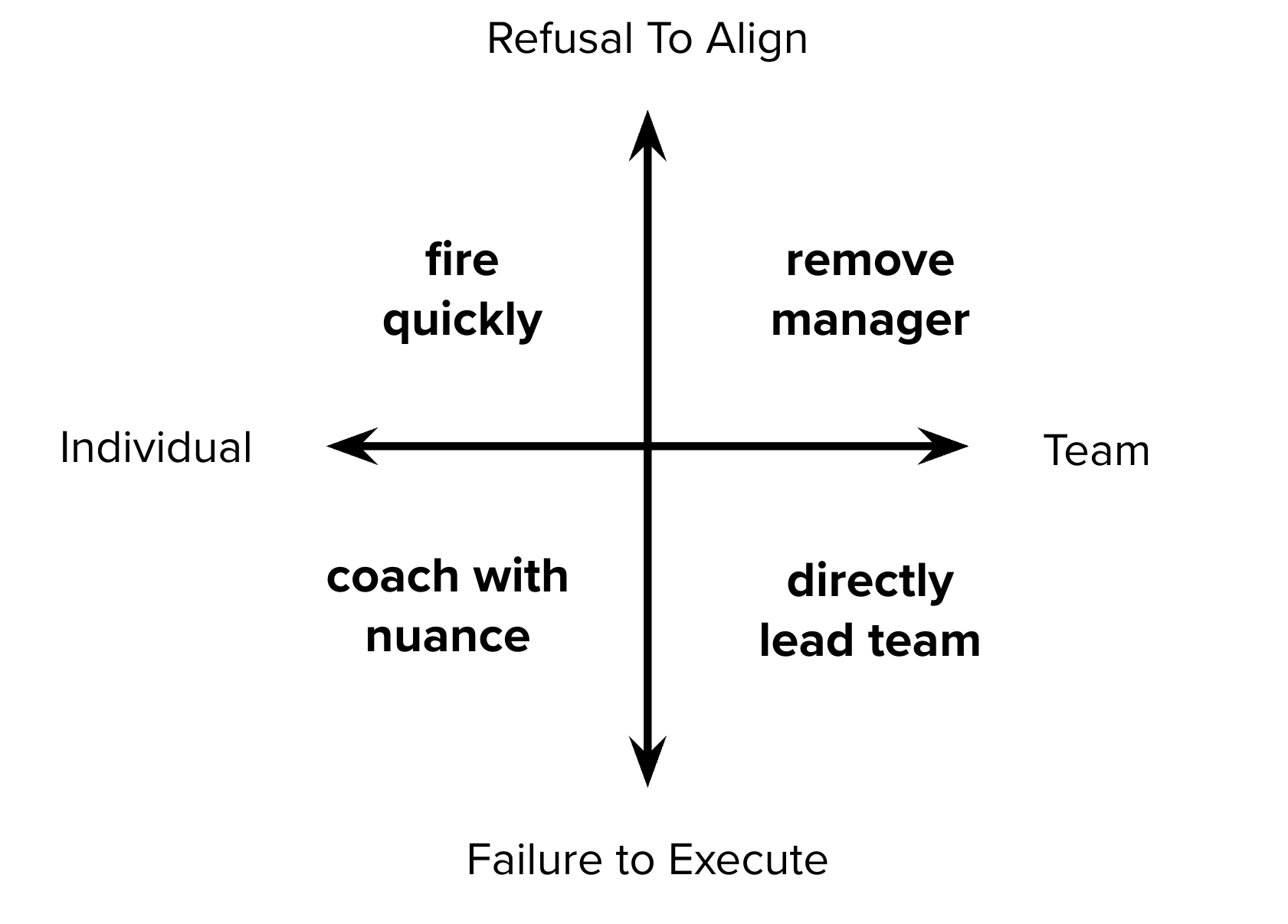
Refusal to Align: A swift, decisive approach is essential.
- Use Performance Improvement Plans (PIPs) to encourage alignment.
- Implement a one-week assessment period to gauge willingness to realign.
- Use clear, direct conversations to set expectations and deadlines.
Failure to Execute: The causes of poor execution can be:
- Lack of clear expectations.
- Learned helplessness due to past project failures.
- Mismatch between skills and current project requirements.
- Absence of feedback.
- Personal crises.
- Harmful managerial relationships.
The remediation strategies are:
- Setting SMART goals.
- Providing targeted coaching and mentorship.
- Ensuring regular, constructive feedback.
- Adjusting workload and responsibilities to accommodate personal circumstances.
- Addressing toxic managerial dynamics.
- Focus on Small Wins: Encouraging success to build momentum and morale.
General Managerial Guidelines:
- Avoid Common Pitfalls:
- Misidentifying alignment issues as skill gaps.
- Delaying intervention in hopes of natural resolution.
- Underestimating the broader impact of inaction.
- Fostering a Winning Mindset: Utilize predictions and reflections to align goals and enhance accountability.
Team-Level Considerations: Similar symptoms as individuals but often more complex due to managerial influence. The recommendations for addressing Team Issues are:
- Execution Failure: Direct intervention to stabilize and redirect efforts.
- Alignment Issues: Removing or realigning misaligned managers to ensure team cohesion with organizational goals.
Resource: Link to article