VUCA Model
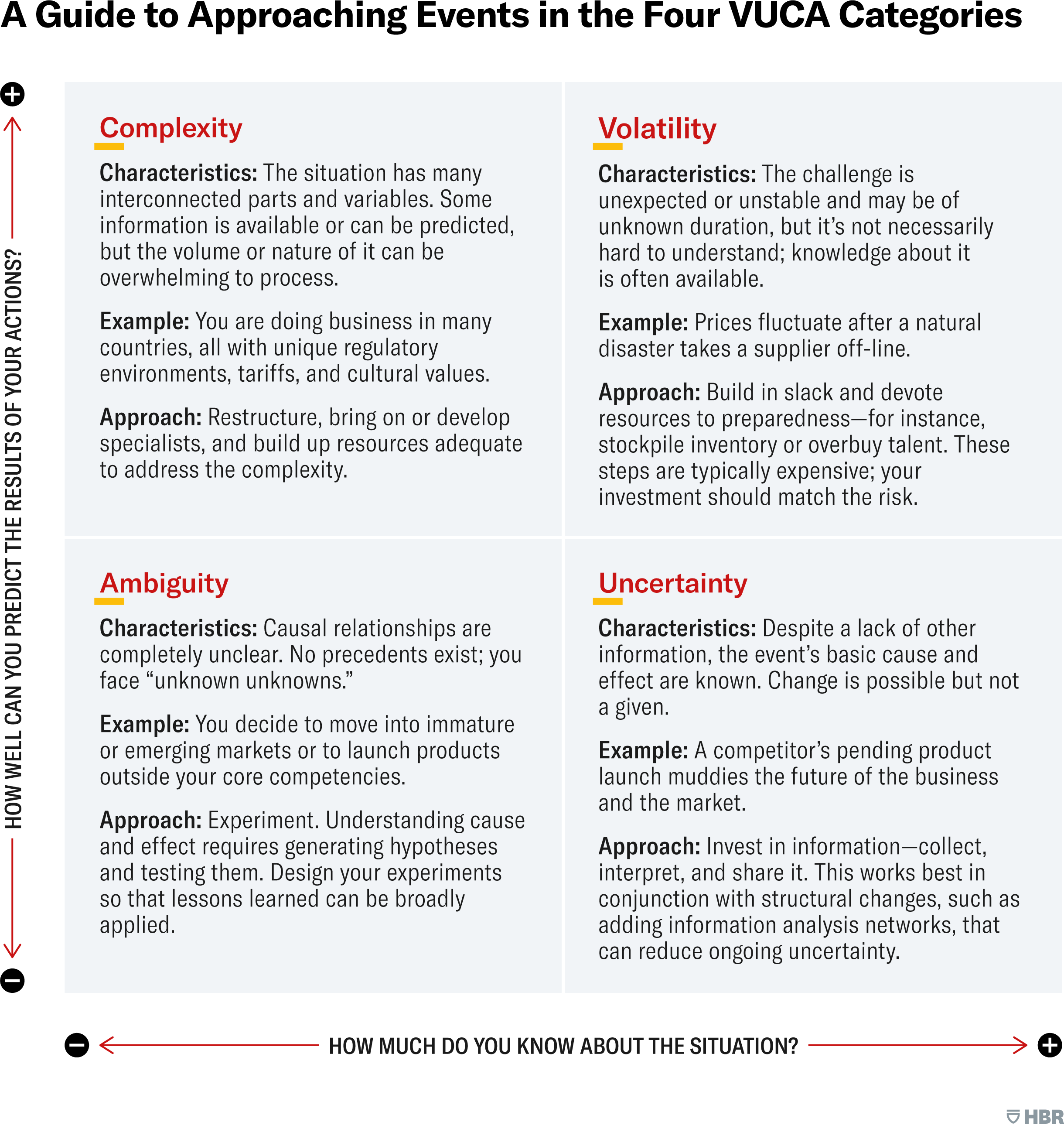
The VUCA framework provides a lens through which organizations can interpret their challenges and opportunities. It emphasizes strategic foresight, insight, and the behavior of entities within organizations. Furthermore, it highlights systemic and behavioral failures often associated with organizational missteps.
V = Volatility: Characterizes the rapid and unpredictable nature of change. U = Uncertainty: Denotes the unpredictability of events and issues. C = Complexity: Describes the intertwined forces and issues, making cause-and-effect relationships unclear. A = Ambiguity: Points to the unclear realities and potential misunderstandings stemming from mixed messages.
These elements articulate how organizations perceive their current and potential challenges. They establish the parameters for planning and policy-making. Interacting in various ways can either complicate decision-making or enhance the ability to strategize, plan, and progress. Essentially, VUCA lays the groundwork for effective management and leadership.
The VUCA framework is a conceptual tool that underscores the conditions and challenges organizations face when making decisions, planning, managing risks, driving change, and solving problems. It primarily shapes an organization’s ability to:
- Anticipate the key issues that emerge.
- Understand the repercussions of particular issues and actions.
- Appreciate how variables interrelate.
- Prepare for diverse scenarios and challenges.
- Interpret and tackle pertinent opportunities.
VUCA is a guideline for fostering awareness and preparedness. It provides a roadmap for organizations to develop readiness, foresight, adaptation, and proactive intervention strategies.
Guide